Control buoyancy before approaching
Check weighting, keep a horizontal trim and leave enough room to recover without grabbing the reef. Ask for a calmer first dive or buoyancy coaching when needed.
 Call now
Verde Island Passage
Puerto Galera sits beside one of the world's richest marine corridors. Responsible diving here starts with buoyancy, distance, restraint and respect for the guide's plan.
Why it matters
Quick answer: The Verde Island Passage between Luzon and Mindoro is widely described by marine researchers as the global center of marine shorefish biodiversity. That richness is the reason many divers come to Puerto Galera, and it also raises the standard of care expected underwater.
Currents connect reefs and coastal habitats across the passage. A dive plan that protects the reef may mean choosing a different site, changing the entry, limiting close photography or cancelling when conditions make control difficult.
Reef etiquette
These practices are simple, visible and useful on every dive. They are commitments and expectations, not claims of an external certification.
Check weighting, keep a horizontal trim and leave enough room to recover without grabbing the reef. Ask for a calmer first dive or buoyancy coaching when needed.
Secure gauges, alternate air sources, cameras and accessories so they do not drag across coral or stir the bottom.
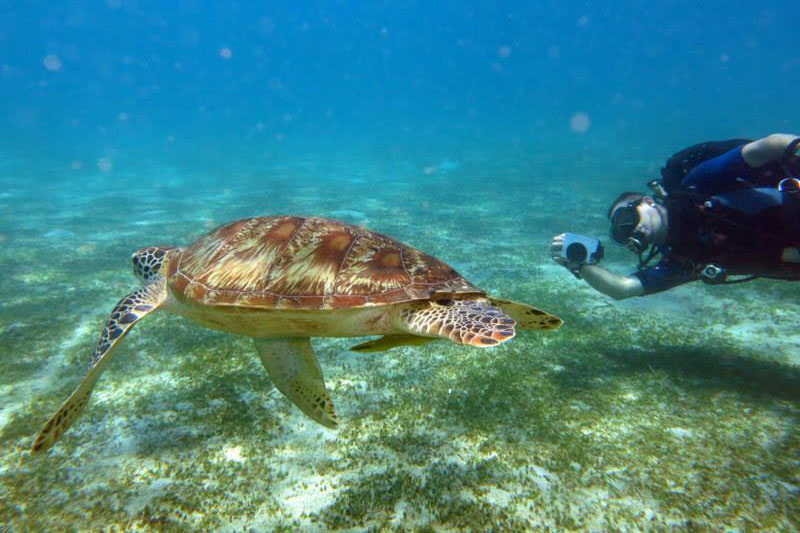
Do not chase turtles, block animals, feed fish, move subjects or crowd a guide's find. Let the animal decide how long the encounter lasts.
Do not collect shells, coral, sand, marine life or cultural objects. Leave the site as you found it.
Listen to briefings on marine protected areas, mooring or entry rules and site-specific restrictions. The daily plan may change with local guidance.
Tell the guide about broken gear, fishing line, distressed wildlife or reef damage. Do not attempt a risky removal underwater without direction.
Underwater photography
Set the camera before approaching. Keep fins and accessories clear, limit repeated flashes, avoid surrounding an animal and move on when the subject changes behavior.
For the proposed September 16-20, 2026 Puerto Galera Underwater Shootout, ask about confirmed dates and camera logistics before booking. Capt'n Gregg's does not promise a camera rinse, charging station or drying area unless the team confirms the arrangement in writing.
Read the Shootout planning note →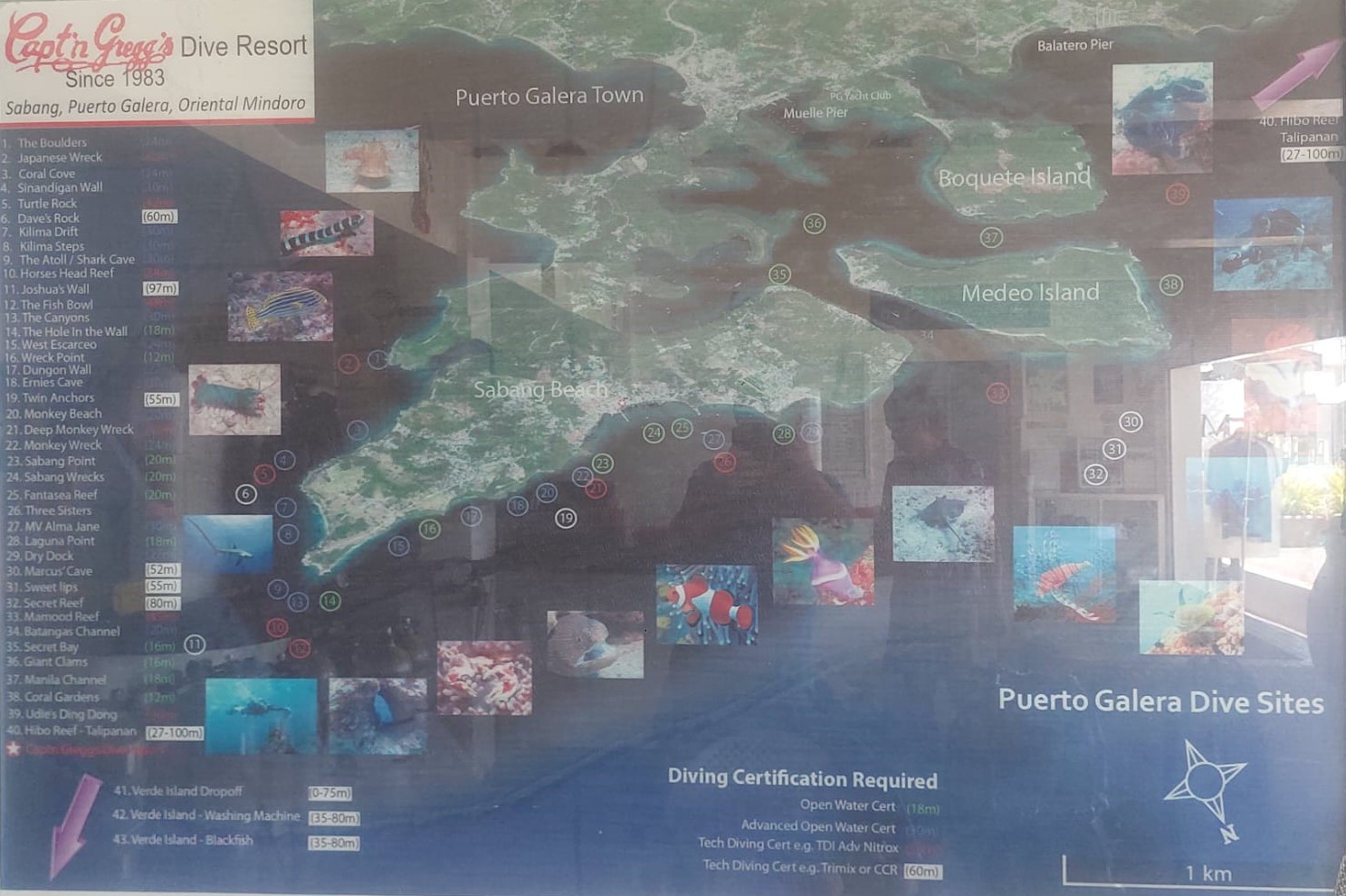
Our practical commitments
Capt'n Gregg's does not claim Green Fins, PADI environmental recognition or another specific eco-certification on this page.
Discuss current, depth, entry, exit, marine-life behavior and no-touch expectations before the dive.
Use certification, recent experience, comfort and conditions to choose a realistic site and route.
Ask rather than assume when local rules, conservation activities, facilities or partnerships need current confirmation.
Responsible diving answers
The Verde Island Passage between Luzon and Mindoro is widely described by marine researchers as the global center of marine shorefish biodiversity. Its reefs, currents and coastal habitats support exceptional species richness, which makes Puerto Galera both a remarkable dive destination and a place that needs careful behavior from visitors. Divers can help by maintaining buoyancy, avoiding contact, following local rules and accepting that the safest low-impact site may change with conditions.
No-touch diving means keeping hands, fins, gauges and cameras away from coral, sand-dwelling animals and other marine life unless safety requires intervention. Do not stand on reefs, hold coral for a photograph, move an animal, feed wildlife or collect shells. Good trim and buoyancy reduce accidental contact. If you are unsure about control, tell the guide before the dive so the plan can include a calmer site or extra buoyancy coaching.
Photographers should secure gauges and accessories, approach slowly, limit repeated flashes, avoid crowding subjects and never reposition animals or coral for a cleaner frame. Keep enough distance that fins and equipment cannot strike the reef, and yield when another diver or the animal shows stress. Ask the guide about site-specific photography rules and skip a shot when current, buoyancy or subject behavior makes a low-impact image unlikely.
This page does not claim a Green Fins, PADI environmental badge or other specific conservation certification for Capt'n Gregg's. The commitments described here are practical guest and dive-team behaviors: clear briefings, no-touch reef etiquette, responsible wildlife interaction, appropriate site selection and honest communication about conditions. Ask [email protected] if you need current details about local marine rules, clean-up activities or partnerships before your trip.
Plan responsibly
Share your dates, certification, recent dive history, camera setup and any buoyancy concerns. A good plan starts before the boat leaves Sabang Beach.